

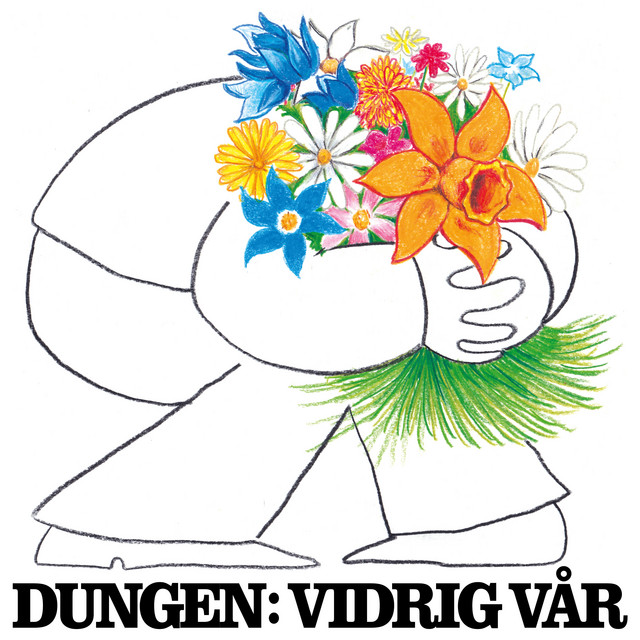
Dungen | Vidrig Vår [Skolhaus]
Psychedelic Rock / Folk Rock / Progressive Rock | 2026
Dungen have spent 25 years developing a remarkably distinctive musical vocabulary. Gustav Ejstes can move between delicate piano melodies, Swedish folk traditions and adventurous psychedelic rock without disturbing the natural flow of a song. On their ninth studio album, Vidrig Vår, those familiar qualities serve some of his most personal writing. Released on September 25, 2026, the ten-track record examines the breakdown of a long relationship and the difficult process of living with its consequences. The music remains beautifully melodic, although there is an unmistakable sadness in Ejstes' delivery. The emotional directness gives this album a character of its own within Dungen's catalog.
The opening title track, "Vidrig Vår", establishes the album's unusually intimate approach. Piano carries the main melody while flute, percussion and carefully arranged strings provide additional harmonic detail. Ejstes sings with an exposed vulnerability that suits the lyrics' mixture of disbelief and emotional exhaustion. Andrea Tarrodi's string arrangement adds considerable depth without overwhelming the vocal. "Ingenting Var Speciellt" continues the restrained approach with a long introduction built around piano and finger snaps. Bass, percussion and flute gradually enter, allowing the arrangement to develop patiently across nearly six minutes. The track's melodic changes are subtle, but the musicians maintain a satisfying sense of movement throughout.
"Bouppdelning" introduces a sharper instrumental character. Reine Fiske's electric guitar becomes particularly prominent, bringing distortion and restless melodic phrasing into the arrangement. Mattias Gustavsson's bass playing follows its own melodic course while Johan Holmegard's energetic drumming gives the song considerable momentum. The performance demonstrates how naturally Dungen can accommodate intricate instrumental writing within a relatively concise composition.
One of the album's strongest moments arrives with "En Gång I Timmen". Its lyrics describe the recurring distress of separation, with the central refrain measuring the return of painful feelings in hourly intervals. Ejstes approaches the subject without exaggeration. His vocal melody is direct and memorable, supported by expressive guitar playing, flute and a steady rhythmic foundation. Electronic elements appear sparingly within the arrangement. Produced by Ejstes and Mattias Glavå, the recording preserves the distinct character of the individual instruments while maintaining a cohesive ensemble sound. The result is emotionally affecting precisely because the performance remains controlled.
"Inga Lätta Sköna Ord" returns to a gentler arrangement centered on piano, organ and flute. Its measured pacing gives Ejstes' vocal considerable room, although the repeated emphasis on quieter material occasionally reduces the album's rhythmic momentum. The instrumental "Snurra På Hjulet" provides a particularly welcome change. Originally released as a standalone single in 2025, it combines wordless vocal melodies with a playful bass line, flute passages, fuzzy guitar and lively percussion. The melodic parts interact continuously, and Holmegard's drumming brings a pleasing looseness to the performance. Its infectious rhythmic character also provides some relief from the record's heavier lyrical concerns.
The second half continues to alternate between intimate songwriting and adventurous ensemble performances. "Alltid En Måndag" begins with a spare piano passage before the rhythm section and strings gradually expand its harmonic range. The patient development rewards close attention, although another lengthy introduction creates a slight sense of repetition within the album's overall sequencing. "Börja Om" addresses that imbalance with more forceful drumming, a prominent bass part and Fiske's rough-edged guitar playing. Its energetic instrumental passages demonstrate the expressive potential of this lineup when all four musicians become fully involved.
The album's most ambitious composition is "En Dag I September", which runs for almost ten minutes. It moves through several distinct instrumental sections, incorporating reversed sounds, piano figures, flute melodies and changes in rhythmic emphasis. Percussion and bass establish increasingly animated passages before the music settles into a gentler conclusion with layered vocals. The composition allows Dungen's progressive tendencies to develop without abandoning the melodic clarity that distinguishes their strongest work. Its transitions sometimes feel deliberately unhurried, but the extended structure gives the musicians sufficient space to develop ideas that would struggle to fit within a conventional song length.
The closing "En Chans Till" brings the album back to its central emotional concerns. Ejstes begins at the piano, singing over a restrained accompaniment before additional instruments gradually enter. The lyrics consider the possibility of another chance while acknowledging the responsibilities and relationships that remain after a separation. The understated vocal performance is especially effective. There is uncertainty in the words and tenderness in the arrangement, with neither element overwhelming the other. The closing song also emphasizes how carefully the album's personal material has been integrated into its musical structure.
Vidrig Vår finds Dungen concentrating on songwriting and emotional expression while retaining their extraordinary command of instrumental detail. The partnership between Ejstes and Glavå produces a warm, clearly defined recording, and the contributions of Fiske, Gustavsson and Holmegard remain essential to its character. The abundance of piano-led passages occasionally leaves the band's harder psychedelic instincts underused. Nevertheless, the melodies are consistently compelling, the instrumental performances are excellent and the lyrical subject gives the collection genuine emotional continuity. Particularly impressive are "En Gång I Timmen", "Bouppdelning" and the expansive "En Dag I September". Dungen have delivered a thoughtful and deeply personal addition to an already impressive discography.
Rating: [4/5]