

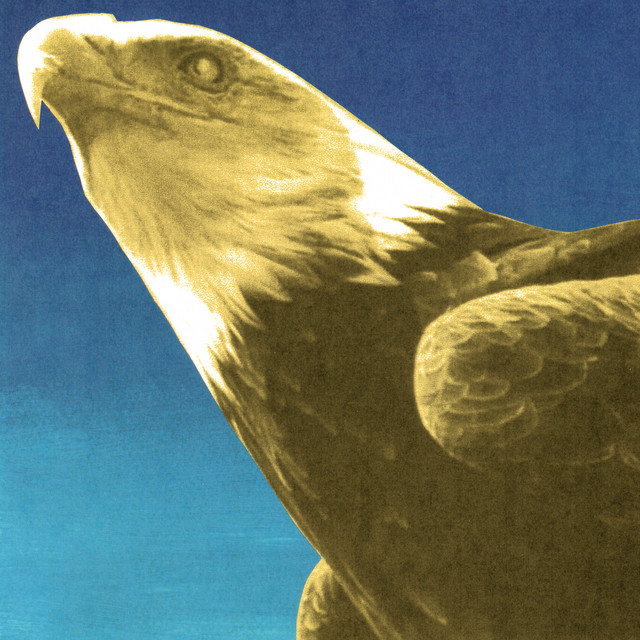
Protomartyr | Hotel Usona [Domino]
Post-Punk / Art Rock / Noise Rock | 2026
Protomartyr have spent sixteen years examining the failures of modern life with remarkable consistency. On their seventh studio album, "Hotel Usona", the Detroit quartet extend that scrutiny into their most ambitious and musically expansive work to date. Released on September 25, 2026, the nine-track record finds vocalist Joe Casey confronting a country increasingly comfortable with its own contradictions. His central concept imagines the United States as a deteriorating hotel, with each song addressing a different form of political, social or personal dysfunction. It's an unusually coherent framework for a band whose lyrics have always rewarded close attention. More importantly, the expanded instrumentation allows the music to express uncertainty, exhaustion and occasional tenderness alongside its familiar aggression.
Recorded at Tarbox Road Studios with producer Dave Fridmann and guitarist Greg Ahee serving as co-producer, "Hotel Usona" considerably broadens Protomartyr's arrangements. Ahee incorporates harmonium, Rhodes piano, xylophone and tubular bells, drawing on Middle Eastern musical influences and the unconventional harmonic vocabulary of 1950s exotica. Jon Fridmann contributes brass arrangements that repeatedly alter the emotional character of the songs. Scott Davidson's bass remains prominent, while Alex Leonard's drumming provides an extraordinary range of rhythmic detail. Fridmann gives these elements considerable presence without sacrificing the band's abrasive character. The resulting compositions frequently move between restrained passages and dense instrumental climaxes, with Casey's distinctive baritone maintaining a compelling narrative continuity.
Opening track "The Old Hotel" establishes the album's uneasy atmosphere through spacious guitar figures, keyboards and increasingly animated percussion. Casey introduces the central concept with characteristic resignation, his delivery gradually becoming more forceful as the arrangement expands. Brass enters at significant moments, introducing a mournful melodic quality that recurs throughout the record. "Sounds We Cannot Hear" develops this approach with greater urgency. Davidson's insistent bass provides stability beneath Ahee's increasingly abrasive guitar passages, while Leonard moves between restrained rhythmic patterns and powerful accents. Horns and keyboards broaden the song's climactic sections without overwhelming its melodic progression. Casey addresses the paralysis of contemporary existence, particularly the exhaustion of maintaining ordinary routines amid persistent anxiety. His measured vocal performance makes the eventual increases in intensity particularly effective.
"Converts" demonstrates the band's growing confidence with slower tempos and sustained instrumental tension. Repeating guitar figures, keyboards and carefully positioned brass support Casey's examination of political opportunism and ideological submission. The vocal delivery remains subdued for much of the song, allowing subtle changes in phrasing to carry considerable weight. "Exalted Eagles" introduces a more confrontational approach. Industrial guitar textures and forceful percussion accompany lyrics examining authoritarian rhetoric, nationalism and institutional hypocrisy. The repeated declaration "He approves us" becomes increasingly disturbing through its insistent repetition. Ahee's guitar work develops considerable harmonic tension, while Leonard's shifting rhythmic accents prevent the arrangement from settling into predictable repetition. The song's progression from controlled unease toward collective chanting is among the album's most convincing musical developments.
At nearly six minutes, "The Knife Dream" provides one of the record's most accomplished explorations of musical restraint. Its slow development incorporates piano, expressive brass passages and irregular rhythmic accents. Casey's lyrics examine violence and psychological disturbance, while the arrangement alternates between comparatively sparse sections and increasingly dense instrumental passages. The brass writing is especially effective because it introduces melodic movement without resolving the composition's underlying tension. Fridmann's production preserves the individual instruments even as the arrangement becomes more complex. The extended structure gives the song sufficient time to develop its unsettling harmonic ideas, making it a particular highlight.
That measured approach disappears on "Feed the Sewer", the album's most openly aggressive composition. Davidson's distorted bass and Leonard's relentless percussion establish an abrasive foundation, with Ahee contributing harsh guitar figures and dissonant textures. Casey directs his criticism toward artificial intelligence, algorithmic consumption and the enormous resources required to sustain contemporary digital systems. The vocal performance becomes increasingly agitated, responding directly to the instrumental intensity. Fridmann emphasizes the physical impact of the rhythm section, giving the drums exceptional weight while retaining the guitar's rough edges. The song's concentrated aggression provides a necessary change of pace within an album otherwise dominated by extended arrangements and deliberate pacing.
The final third of "Hotel Usona" returns to slower and more ambiguous compositions. "Lavender – Gospel" combines sustained keyboard tones, bass repetition and prominent brass interventions. Its movement between sparse passages and heavier instrumental sections gives Casey room to explore a distinctly troubled emotional register. The track also demonstrates how successfully Ahee's expanded instrumentation has become integrated into the band's songwriting. "Third Country" addresses deportation and the erosion of compassion through subdued rhythms and mournful melodic figures. Its restrained pacing emphasizes the lyrics, although the composition occasionally struggles to sustain the dramatic momentum established by the preceding songs. The instrumental development is comparatively limited, making it one of the record's less immediately persuasive moments.
"Checking Out" closes the album with its longest composition, extending beyond seven minutes. Casey approaches the anxieties of parenthood and personal responsibility within the record's broader political concerns. Leonard's drumming becomes increasingly elaborate, with shifting accents and extended rhythmic passages driving the arrangement through several distinct sections. Guitar, bass and brass develop around these changes, while Casey moves between controlled narration and forceful declarations. The extended instrumental conclusion gives Leonard particular prominence. There is genuine emotional uncertainty in the performance, especially in the tension between Casey's repeated desire to withdraw and the responsibilities he continues to acknowledge.
The greatest achievement of "Hotel Usona" is the band's ability to incorporate a much broader musical vocabulary while retaining the rhythmic intelligence and lyrical specificity that have defined their work. Compared with the comparatively direct arrangements of "Relatives in Descent" and the more personal concerns of "Formal Growth in the Desert", this record allows its compositions considerably greater structural freedom. Some passages demand patience, and the conceptual framework occasionally imposes a degree of uniformity on the album's emotional perspective. Nevertheless, the strongest tracks justify their extended running times through detailed arrangements and convincing performances. Fridmann's production brings exceptional definition to Leonard's percussion, while Ahee's instrumental contributions introduce new harmonic possibilities. Casey remains an unusually perceptive lyricist, capable of examining political absurdity without abandoning individual vulnerability. "Hotel Usona" is demanding, often deeply uncomfortable and consistently inventive. Its musical sophistication gives the band's observations substantial emotional force.
Rating: [4/5]
https://www.dominomusic.com/releases/protomartyr/hotel-usona/lp